After the Storm: Navigating Storm Damage Claims
By Community First Financial Advisors
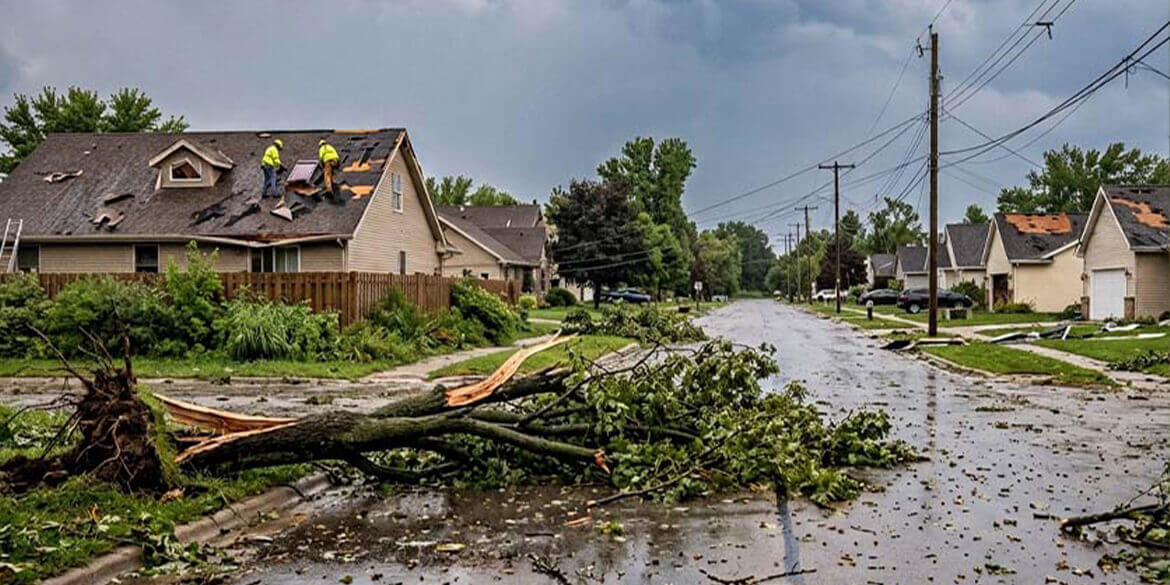
When a major storm hits, dealing with the damage can feel overwhelming long before the insurance paperwork begins. A fallen tree, a leaking roof, shattered windows, or water-soaked belongings can leave you scrambling to protect your property and wondering what your insurance will cover (up to your policy limits). Knowing what to do in the first hours and days after a storm can make a big difference in how smoothly a storm damage claim goes and how quickly you recover.
Safety First
Downed power lines, gas leaks, weakened tree limbs, and structural issues can turn a storm-damaged home into a dangerous one. Before you assess the damage, make sure that it's safe enough for you and your family to remain on the premises. Insurance policies typically require policyholders to make reasonable efforts to protect their property from additional loss after a storm. Take steps to prevent further damage to your home (e.g., putting a tarp on a damaged roof or boarding up broken windows), because the insurance company may not cover any losses that occur after the storm passes.
Document Everything
After you have safely assessed the damage, you'll want to document it for your insurance company. Take pictures and video of every impacted area, inside and out. Next, make a list of what was damaged, when you discovered it, and whether the item needs to be repaired or replaced. If possible, gather receipts, product manuals, online order histories, or older photos to help support your claim.
Contact Your Insurer
Once the storm damage is under control, you should contact your insurance company as soon as possible. Most insurers allow you to file a claim by phone, app, or online portal. When you file your claim, be sure to ask for the claim number and store it in a safe place, since you will need to refer to it when you contact your insurer going forward. At this point, you can also ask your insurer what documents are needed, whether you can make temporary repairs, and when an adjuster is expected to inspect the damage. If your home suffers severe storm damage from a natural disaster, you may be eligible for immediate disaster relief funds and special programs through the Federal Emergency Management Agency (FEMA) and various state/local government agencies.
Understand What Your Policy Covers
Carefully review your policy's declarations page, which summarizes your policy and shows you your coverage limits, deductibles, and policy exclusions. Ideally, your home and its contents should be insured to their full replacement cost, including any new additions, remodels, and furniture. Keep in mind that certain types of storm damage (e.g., flood and hurricane) are generally not covered by a standard policy or may have a separate deductible. If you have questions about your current coverage or want to explore what additional coverage you might need in the future, contact your insurer.
Protecting Your Home from Storm Damage
Monitor Your Claim
After you have filed a claim, keep a paper trail of the process by saving all emails, letters, estimates, receipts, and claim forms in one place. Keep in mind that delays are common during the claims process, especially after a major storm, so don't hesitate to follow up to ensure that your claim is moving along. If your insurer reviews the claim and approves it, payment will be issued in the form of a check, direct deposit, or sent directly to your contractor. If your claim is denied or you are offered less than expected, you can request a re-inspection of the damage or submit additional evidence to support your claim.
Copyright 2006- Broadridge Investor Communication Solutions, Inc. All rights reserved.
Broadridge Investor Communication Solutions, Inc. does not provide investment, tax, or legal advice. The information presented here is not specific to any individual’s personal circumstances.
Check the background of your financial professional with .
Securities and advisory services are offered through LPL Financial (LPL), a registered investment advisor and broker-dealer (Member /). Insurance products are offered through LPL or its licensed affiliates. Community First Credit Union and Community First Financial Advisors are not registered as a broker-dealer or investment advisor. Registered representatives of LPL offer products and services using Community First Financial Advisors, and may also be employees of Community First Credit Union. These products and services are being offered through LPL or its affiliates, which are separate entities from, and not affiliates of, Community First Credit Union or Community First Financial Advisors. Securities and insurance offered through LPL or its affiliates are:
Not Insured by NCUA or Any Other Government Agency
Not Credit Union Guaranteed
Not Credit Union Deposits or Obligations
May Lose Value
Community First Credit Union (“Financial Institution”) provides referrals to financial professionals of LPL Financial LLC (“LPL”) pursuant to an agreement that allows LPL to pay the Financial Institution for these referrals. This creates an incentive for the Financial Institution to make these referrals, resulting in a conflict of interest. The Financial Institution is not a current client of LPL for brokerage or advisory services. Visit LPL Financial for more information.
The LPL Financial registered representatives associated with this website may discuss and/or transact business only with residents of the states in which they are properly registered or licensed. No offers may be made or accepted from any resident of any other state. Community First Financial Advisors is not registered as a broker-dealer or investment advisor.